『六月声明』
文書13


Statement against the flag and anthem bill

〈英語訳「日の丸・君が代の法制化」に反対する共同声明〉


  On June 11, the Japanese government submitted a bill concerning the national flag and anthem. The bill proposes for the first time after the end of the Second World War to grant legal recognition to the Hinomaru (Sun Flag) as the national flag and "Kimigayo" as the national anthem. As for the latter ("Kimigayo", that is, "the reign of the Emperor") in particular, the government claims that "while the kimi (the Emperor)' in Kimigayo' used to be interpreted as referring to the Emperor defined as the sovereign in the Imperial Constitution it is now pertinent under the post-war Japanese Constitution to interpret it ( kimi') as the Emperor defined as the symbol of both the state and the unity of the people."

  The bill, hastily drafted as it was in response to the accident of a high school principal's suicide in Hiroshima prefecture, has been squeezed into the agenda shortly before the end of the ordinary session of the Diet. There has naturally been no sufficient discussion about the issue, let alone anything like a national consensus; the bill is being brought forward with no underlying rational argument but simply on the strength of the expected majority which the expertise of vote-tallying among the political parties ascertains. Such a blatant move of legislation has every reason to alarm all of us who are engaged both in Japan and abroad in intellectual activities, which range from history to politics, from cultural studies to social sciences, from semiotics to semantics --- in short, those disciplines which deal in signs and symbols. It is our duty to call on the world at large as well as the Japanese people to give their careful consideration to the various and serious consequences the present issue (an instance of "politics of symbols") will bring about.

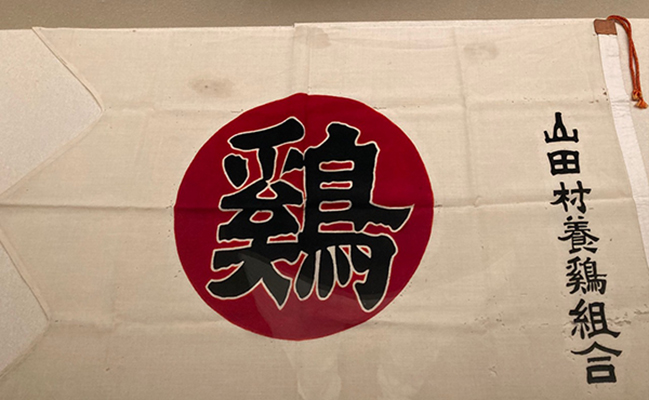
 Historically, "Hinomaru" and "Kimigayo" played a leading role in Japan's modernization process as a pair of symbolic apparatuses with which to create a sense of national unity centering around the Emperor. Domestically, the nation state made use of these symbolic devices as it regimented the people in rigorous conformism which tolerated no dissent. Internationally, they were used as a tool in annexing other peoples and invading the neighboring Asian countries and regions. It is precisely because of these instances of their symbolic use that "Hinomaru" and "Kimigayo" have been the target of critical debates in the controversies over the Emperor system, particularly its continuities or discontinuities between pre- and post-war political establishments. What is taking place as the proposition of the present bill, taking advantage of the post-Cold War situation where the opposition forces are enervated, is tantamount to the virtual liquidation of those critical debates that have been conducted since the end of the second World War. The proposed bill is a legal attempt to put into oblivion what must not be forgotten. What is at stake are the memories of ethnic and cultural minorities, the memories of the victims of the war, and the memories of the invaded and colonized peoples in neighboring regions. It is an attempt by the Japanese government to reinforce and reconfirm the political continuities between pre- and post-war systems, reducing the whole debate on this critical issue to silence. It is as if to say that there happened nothing serious to reflect on to proceed into the next century.

 There has been neither any real discussion about the history and nature of "Hinomaru" and "Kimigayo" nor any adequate self-reflection and self-recognition over what Japan as nation has brought about both in and outside Japan in its modernization process. It is under these circumstances that the current proposal of the bill has been made for the legislation of the national symbolic apparatuses. It is therefore difficult for us no to be alarmed by the present state of affairs and we tremble to think that it would be a grave case should it become a precedent.

 We are also under apprehension that this unprecedented attempt at the legislation of the national flag and anthem is being made primarily in the compulsory education system. Nothing is more remote from a need in the school education than the compulsory hoisting of the national flag and the singing in unison the national anthem. The only way we can truly educate students about the importance of national identity is not by indoctrinating them with nationalistic ideas but by encouraging them to reflect on the possible international principles on which we can live and act together with the rest of the world. To a better understanding of the importance of national identity what is necessary is the deepening of historical knowledge in international relations and the discussion over the values and basics of civil society in which peoples of different cultures, ethnicities and languages can live together.

 We therefore take a stand against the current attempt by the Japanese government to legislate the use of "Hinomaru" and "Kimigayo". We demand that the Japanese government withdraw the present bill. We urge all the members of the Diet to vote against the bill. And we appeal to the Japanese people and the rest of the world to take this issue seriously.


TOP

INDEX

HOME